Prematurity and low birth weight
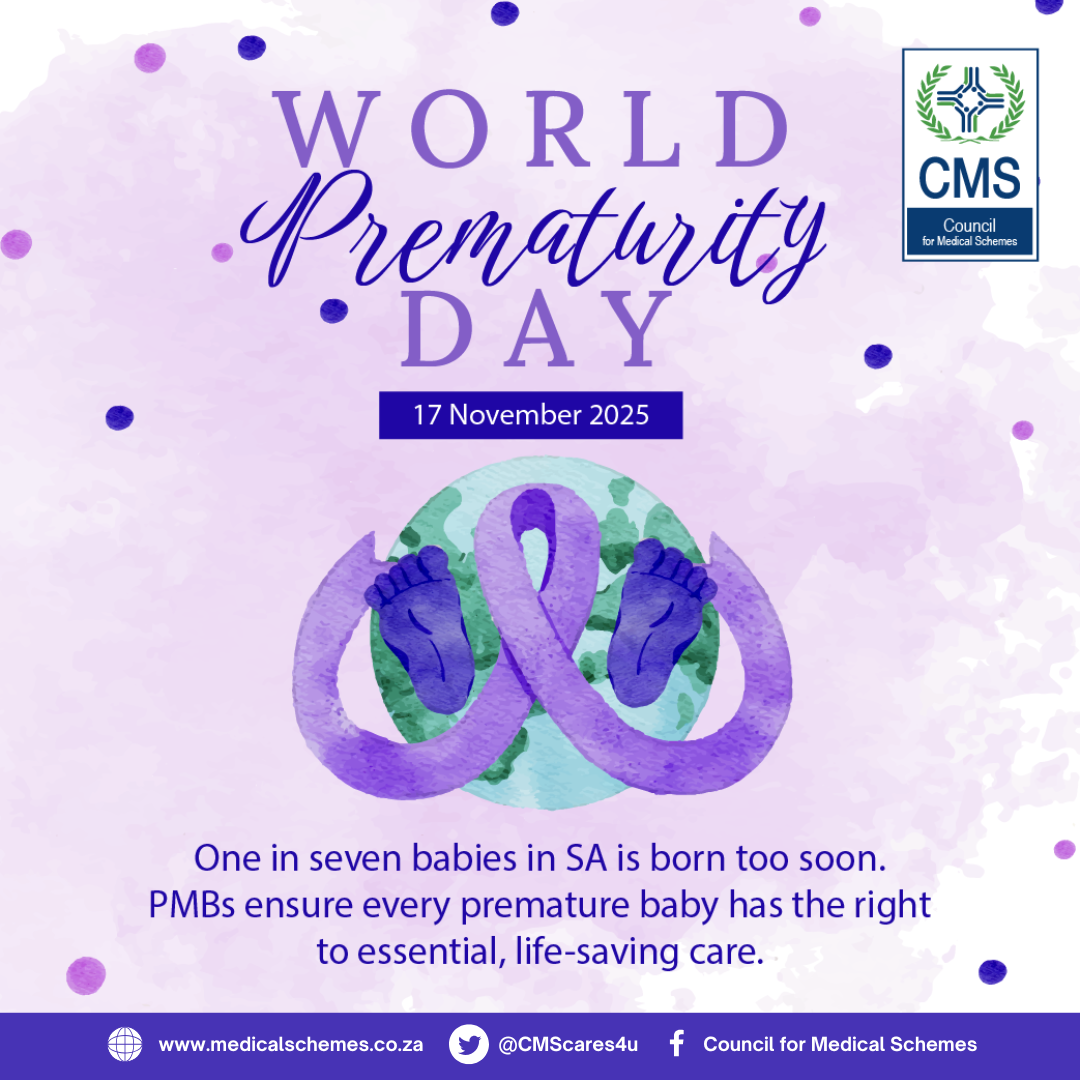
World Prematurity Day, observed annually on 17 November, raises awareness of preterm birth and its impact on the health and well-being of affected babies and their families. Globally, 1 in 10 babies is born prematurely every year. In South Africa, the rate is even higher, with about one in seven babies born before 37 weeks of pregnancy.
Premature babies require specialised attention and specific care to enable them to survive, grow and develop healthily. In the context of this day, the Council for Medical Schemes (CMS) emphasises that quality care for these babies should not be a privilege but a right that must be guaranteed for all families.
What is prematurity and low birth weight?
A baby born before 37 completed weeks of pregnancy is considered premature (born too early).
There are four categories of prematurity, depending on how early the baby is born, which are:
- Late preterm (born between 34 and 36 weeks of pregnancy)
- Moderately preterm (born between 32 and 34 weeks of pregnancy)
- Very preterm (born before 32 weeks of pregnancy)
- Extremely preterm (born at or before 25 weeks of pregnancy)
Most premature births occur in the late preterm stage (between 34 and 36 weeks). As these babies are born before full growth and development, most of them are born with low birth weight (LBW).
Low birth weight refers to a baby weighing less than 2 500 g, regardless of how far the pregnancy has progressed. It is further classified as:
- Very Low Birth Weight (VLBW): less than 1 500 g.
- Extremely Low Birth Weight (ELBW): less than 1 000 g.
Possible complications
Premature babies may face immediate and long-term challenges such as breathing and feeding difficulties, infections, low body temperature, and learning, vision or hearing problems later in life. However, with proper neonatal care, most premature babies can grow up healthy and strong.
What are the risk factors?
Premature birth and LBW can happen for many reasons, including:
- Pregnancy before age 18 or after 35.
- High blood pressure or diabetes during pregnancy.
- Infections and poor nutrition.
- Multiple pregnancies (twins, triplets).
- Short intervals between pregnancies.
- Smoking, alcohol or drug use.
- Limited access to antenatal care.
Recognising these risks makes it even more important to focus on prevention and early care. Here is how you can reduce your risk:
- Eat healthy, balanced meals.
- Attend all antenatal appointments.
- Follow your doctor’s advice for chronic conditions.
- Avoid alcohol, tobacco and drugs during pregnancy.
- Ask about support services if you experience stress or trauma.
PMB level of care
If a baby is born prematurely, several conditions related to prematurity and low birth weight fall under the Prescribed Minimum Benefits (PMBs). This means medical schemes are legally required to fund the diagnosis, treatment and care of these conditions.
PMB-related neonatal cover typically includes:
- Respiratory complications such as breathing difficulties or immature lungs.
- Low birth weight and very low birth weight care, including feeding support and thermal regulation.
- Neonatal medical and surgical emergencies, such as infections or gastrointestinal conditions like necrotising enterocolitis (NEC).
- Ongoing monitoring and stabilisation in neonatal wards where medically necessary.
To ensure full PMB cover, members may be required to use a DSP. If a DSP is not used, co-payments may apply unless it was an emergency or the DSP was not accessible.
Download the CMScript on prematurity and low birth weight here.