CMScript 8 of 2025: Focus on Other interstitial pulmonary diseases with fibrosis
Our lungs keep us healthy by supplying the body with oxygen through millions of tiny air sacs. Sometimes, the tissue around these air sacs becomes thickened and scarred, making it harder for the lungs to work as they should. Such scarring leads to conditions known as interstitial pulmonary diseases with fibrosis.
In this issue of the CMScript, we highlight what these conditions are, how they affect breathing, and why early detection and management are so important for improving quality of life.
What are Other interstitial pulmonary diseases with fibrosis?
Interstitial lung diseases (ILDs) are a group of conditions that affect the lungs, causing inflammation (swelling) and scarring of the lung tissues (pulmonary fibrosis). This scarring makes the lungs stiff and less able to function properly. Over time, it can lead to breathing difficulties.
There is no cure because the damage cannot be reversed, but early detection and treatment can help slow its progression and ease symptoms.
Signs and symptoms
- Shortness of breath, especially during activity
- A dry, persistent cough
- Unexplained weight loss or fatigue
- Loss of appetite
- Occasional chest or joint pain
- Coughing up small amounts of blood
In many cases, lung damage has already occurred by the time symptoms are noticed, which is why it is important to consult a doctor as soon as any of the signs appear.
Risk factors and how to reduce them
Certain factors increase the likelihood of developing interstitial pulmonary diseases with fibrosis. While not all can be prevented, here are some of the main risks and how you can lower them:
- Exposure to dust, mould, bird feathers, chemicals, or asbestos puts you at risk, so limit exposure where possible and wear protective masks in high-risk environments.
- People with autoimmune conditions (e.g., rheumatoid arthritis or lupus) are more likely to develop these lung diseases, so manage your condition with regular check-ups and treatment from your healthcare provider.
- Undergoing radiation therapy or using certain medications may increase the risk, so always discuss possible side effects with your doctor and monitor your lung health during treatment.
- Smoking, whether current or past, raises the likelihood of lung scarring, so quitting is one of the most effective ways to reduce further damage and protect your lungs.
- Being male or over the age of 60 is also a risk factor, so while these cannot be changed, regular check-ups, staying up to date with vaccinations, and seeking early treatment for lung infections can help safeguard your health.
How is it diagnosed?
Diagnosing interstitial lung disease can be challenging, as many other conditions may cause similar symptoms. To rule out these other conditions, your doctor may recommend:
- A medical and family history review
- Chest X-ray or CT scan to check for scarring
- Lung function tests (spirometry)
- Blood tests to identify inflammation or immune issues
- Bronchoscopy (examining the lungs with a small tube)
- Lung biopsy to confirm the cause
PMB level of care
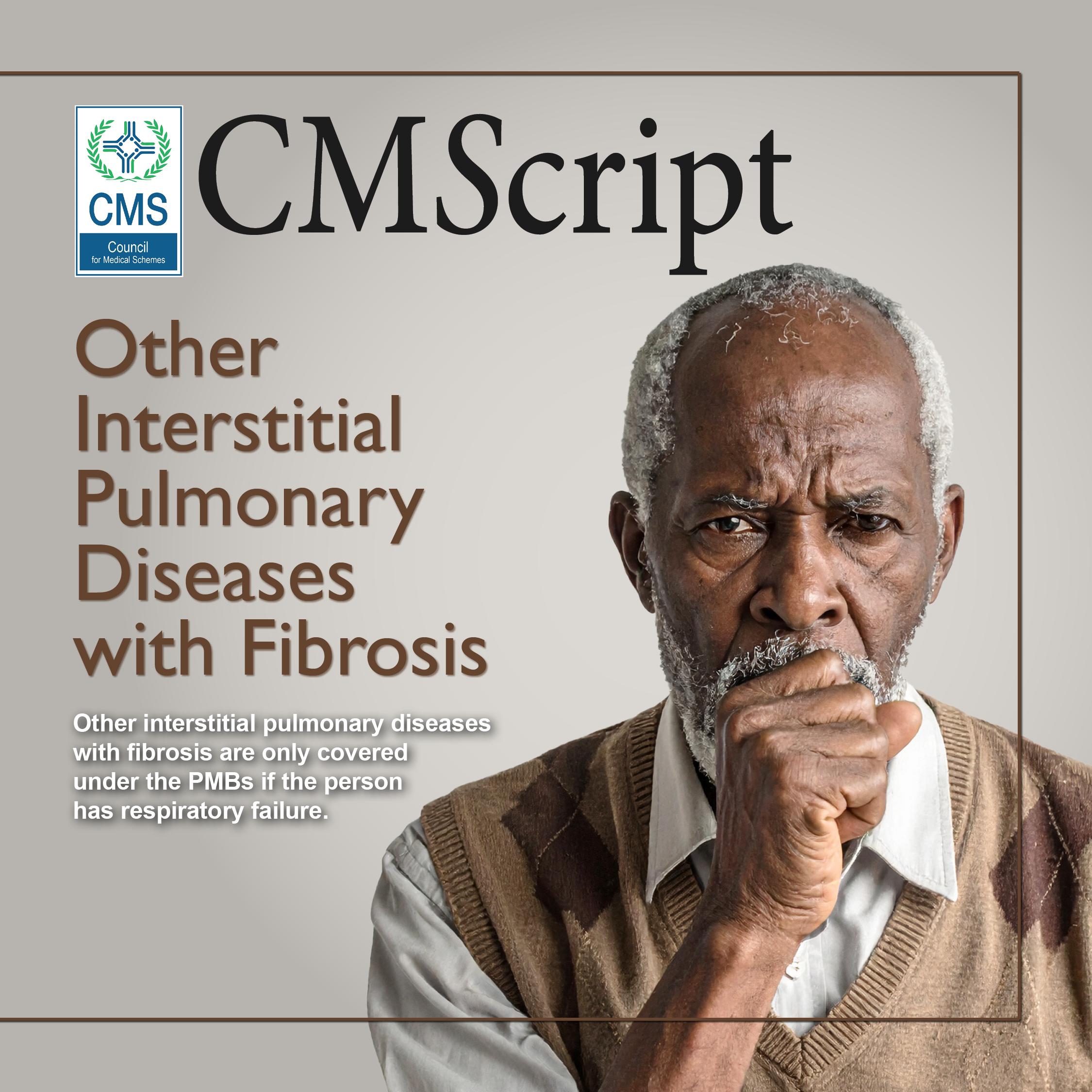
Other interstitial pulmonary diseases with fibrosis are not classified as PMB conditions. They are only covered under PMBs if the person has respiratory failure, as listed under Diagnosis and Treatment Pair (DTP) 158D – Respiratory failure, regardless of cause.
It is important to note that:
- Tests are covered only if respiratory failure is present.
- Treatment and follow-up care, such as medication, oxygen therapy, managing underlying conditions, or, in severe cases, a lung transplant, may be covered, but medical schemes may require members to use certain designated service providers (DSPs).
- If you go to a provider outside the DSP list and it is not an emergency, the scheme may charge a co-payment.
It is essential to check what your medical scheme benefit option covers, and follow any required steps, such as pre-authorisation.
Download the full CMScript here.